Buy online-accountants.com ?
We are moving the project
online-accountants.com .
Are you interested in purchasing the domain
online-accountants.com ?
domain@kv-gmbh.de · 0541-91531010
Buy online-accountants.com ?
What experiences does a financial economist have?
A financial economist typically has experiences in analyzing financial data, conducting economic research, and making forecasts and predictions about financial markets and economic trends. They also have experience in developing and implementing financial models to evaluate investment opportunities, assess risk, and optimize financial decision-making. Additionally, financial economists often have experience in advising businesses and organizations on financial strategies, as well as in teaching and communicating complex financial concepts to a wide range of audiences. **
How can one further educate themselves as a financial economist?
One can further educate themselves as a financial economist by pursuing advanced degrees such as a Master's or Ph.D. in economics or finance. Additionally, staying updated with the latest research and developments in the field by reading academic journals, attending conferences, and participating in professional organizations can help in gaining a deeper understanding of financial economics. Seeking out mentorship and networking with experienced professionals in the field can also provide valuable insights and opportunities for learning and growth. Finally, gaining practical experience through internships or entry-level positions in finance or economics can provide hands-on learning and application of theoretical knowledge. **

Similar search terms for Economist
Top-Angebote
Products related to Economist:
-
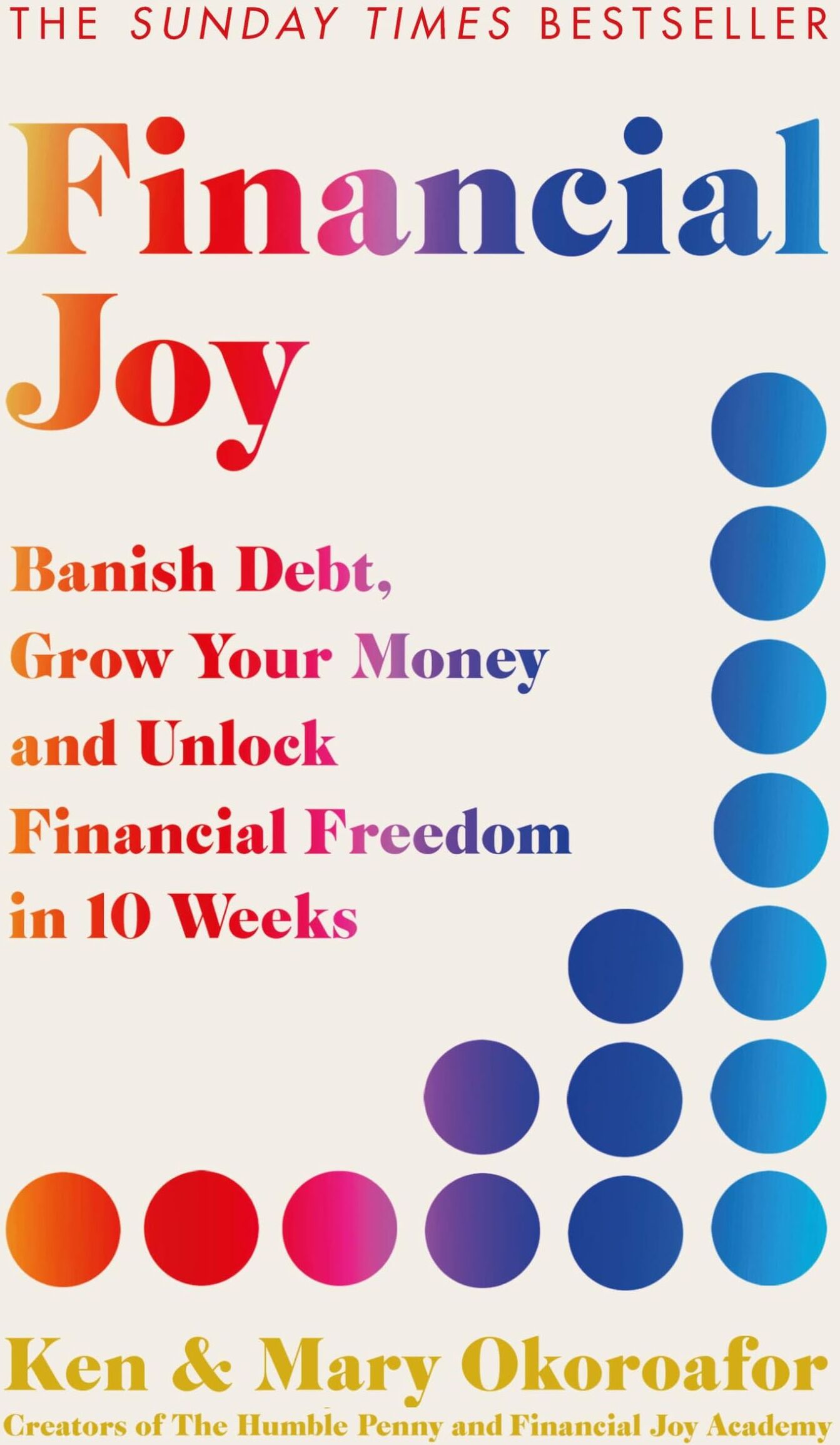
Quercus Financial Joy: Set your financial goals for 2026 - Banish Debt, Grow Your Money and Unlock Financial Freedom by Ken and Mary OkoroaforAs seen on ITV's This Morning! A life-changing 10-week plan to help you to turn your life around and design a path to financial freedom, enriched with the small experiences that bring you joy. Stop worrying about money. Start enjoying your life. You might be struggling in debt, living paycheque to paycheque, or worried about preparing for retirement; maybe you're considering your first investment, or you just want an escape plan from the '9 to 5'. Wherever you are on your journey, this book will revolutionize your lifestyle and your relationship with money. Authors Ken and Mary Okoroafor started out as resource-poor, working-class immigrants and have built a life of financial independence and joyful moments through hard work, smart saving and savvy investing. They know what it feels like to start from ground zero, and as a chartered accountant and former CFO, Ken shares his financial expertise to help you unlock the secret to building wealth. You'll learn how to take control of your finances, develop good money habits, become debt-free, invest in assets and multiply your income so you can create the freedom to travel, spend time with your loved ones and plan for a stress-free (early) retirement - all whilst prioritising your wellbeing and having fun! It also includes a dozen real-life interviews with singles, couples and those with children, from different backgrounds, age groups and stages of their money journey, including a few well-known public figures. Financial joy can be achieved by anyone - and it can start today, not tomorrow.5,99 £*Shipping: 2,99 £Secure redirect to the provider
-
Flythe Consulting Arika Wall Sconce Pair, Pair, Satin NickelThe Arika Wall Sconce Pair is an adaptation of old-fashioned light fixtures, with an appealing design that will complement modern decor. The lacquered solid brass sconces have 4.75 dia.x7 H clear glass hurricanes that will protect your standard...179,00 $*Shipping: 22,95 $Secure redirect to the provider



-
Are there good career prospects for a graduate financial economist (FH)?
Yes, there are good career prospects for a graduate financial economist (FH). Graduates with this qualification can pursue careers in various sectors such as banking, investment firms, insurance companies, and government agencies. They can work as financial analysts, risk managers, investment bankers, or financial consultants. The demand for professionals with expertise in financial economics is expected to remain strong, making it a promising field for career growth and advancement. **
-
Who is the economist?
An economist is a professional who studies and analyzes the production, distribution, and consumption of goods and services. They use economic theories and principles to provide insights into various aspects of the economy, such as employment, inflation, and economic growth. Economists also conduct research, develop forecasts, and provide recommendations to businesses, governments, and other organizations to help them make informed decisions about resource allocation and policy development. Overall, economists play a crucial role in understanding and shaping the economic landscape. **
-
What is the difference between a tax clerk and a financial economist?
A tax clerk typically handles administrative tasks related to tax collection and processing, such as data entry, filing tax returns, and assisting taxpayers with inquiries. On the other hand, a financial economist focuses on analyzing economic data, trends, and policies to provide insights and recommendations on financial markets, investments, and economic development. Financial economists often work in research, consulting, or government agencies to help make informed decisions based on economic analysis. **
-
What is the difference between a financial economist and a tax advisor?
A financial economist focuses on analyzing and understanding the financial markets, investment strategies, and economic trends to make informed decisions about investments and financial planning. They use their expertise to provide insights into the behavior of financial markets and the impact of economic policies on investment decisions. On the other hand, a tax advisor specializes in providing guidance and advice on tax-related matters, including tax planning, compliance, and strategies to minimize tax liabilities. They help individuals and businesses navigate the complex tax laws and regulations to ensure they are in compliance and taking advantage of any available tax-saving opportunities. In summary, while a financial economist focuses on analyzing financial markets and economic trends, a tax advisor specializes in providing guidance and advice on tax-related matters to minimize tax liabilities. **


What does an economist do?
An economist studies how societies allocate scarce resources to satisfy unlimited wants. They analyze data, trends, and economic indicators to understand and predict economic behavior. Economists also provide insights and recommendations to businesses, governments, and organizations to help them make informed decisions about resource allocation, production, and consumption. Their work can involve researching and analyzing economic issues, developing economic models, and providing economic forecasts and policy recommendations. **
How are payroll taxes recorded?
Payroll taxes are recorded as a liability on the company's balance sheet until they are paid. When payroll taxes are withheld from employees' paychecks, they are recorded as a current liability until they are remitted to the appropriate tax authorities. The employer's portion of payroll taxes, such as Social Security and Medicare taxes, are also recorded as a current liability until they are paid. Once the payroll taxes are paid, the liability is reduced and the corresponding expense is recognized on the income statement. **
Top-Angebote
Products related to Economist:
-
Random House Books The Undercover Economist by Tim Harford"The economy [isn't] a bunch of rather dull statistics with names like GDP (gross domestic product)," notes Tim Harford, columnist and regular guest on NPR's Marketplace, "economics is about who gets what and why." In this acclaimed and riveting book-part exposé, part user's manual-the astute and entertaining columnist from the Financial Times demystifies the ways in which money works in the world. From why the coffee in your cup costs so much to why efficiency is not necessarily the answer to ensuring a fair society, from improving health care to curing crosstown traffic-all the dirty little secrets of dollars and cents are delightfully revealed by The Undercover Economist.4,99 £*Shipping: 1,99 £Secure redirect to the provider
-
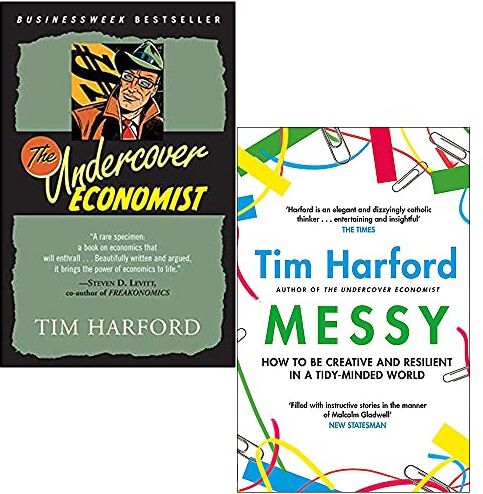
Random House Books The Undercover Economist & Messy How to Be Creative and Resilient By Tim Harford 2 Book setThe Undercover Economist & Messy How to Be Creative and Resilient in a Tidy-Minded World By Tim Harford 2 Books Collection Set: The Undercover Economist: "The economy [isn't] a bunch of rather dull statistics with names like GDP (gross domestic product)," notes Tim Harford, columnist and regular guest on NPR's Marketplace, "economics is about who gets what and why." In this acclaimed and riveting book-part exposé, part user's manual-the astute and entertaining columnist from the Financial Times demystifies the ways in which money works in the world. From why the coffee in your cup costs so much to why efficiency is not necessarily the answer to ensuring a fair society, from improving health care to curing crosstown traffic-all the dirty little secrets of dollars and cents are delightfully revealed by The Undercover Economist. Messy How to Be Creative and Resilient in a Tidy-Minded World: The urge to tidiness seems to be rooted deep in the human psyche. Many of us feel threatened by anything that is vague, unplanned, scattered around or hard to describe. We find comfort in having a script to rely on, a system to follow, in being able to categorise and file away.We all benefit from tidy organisation - up to a point. A large library needs a reference system. Global trade needs the shipping container. Scientific collaboration needs measurement units. But the forces of tidiness have marched too far. Corporate middle managers and government bureaucrats have long tended to insist that everything must have a label, a number and a logical place in a logical system.8,99 £*Shipping: 2,99 £Secure redirect to the provider
-
Quercus Financial Joy: Set your financial goals for 2026 - Banish Debt, Grow Your Money and Unlock Financial Freedom by Ken and Mary OkoroaforAs seen on ITV's This Morning! A life-changing 10-week plan to help you to turn your life around and design a path to financial freedom, enriched with the small experiences that bring you joy. Stop worrying about money. Start enjoying your life. You might be struggling in debt, living paycheque to paycheque, or worried about preparing for retirement; maybe you're considering your first investment, or you just want an escape plan from the '9 to 5'. Wherever you are on your journey, this book will revolutionize your lifestyle and your relationship with money. Authors Ken and Mary Okoroafor started out as resource-poor, working-class immigrants and have built a life of financial independence and joyful moments through hard work, smart saving and savvy investing. They know what it feels like to start from ground zero, and as a chartered accountant and former CFO, Ken shares his financial expertise to help you unlock the secret to building wealth. You'll learn how to take control of your finances, develop good money habits, become debt-free, invest in assets and multiply your income so you can create the freedom to travel, spend time with your loved ones and plan for a stress-free (early) retirement - all whilst prioritising your wellbeing and having fun! It also includes a dozen real-life interviews with singles, couples and those with children, from different backgrounds, age groups and stages of their money journey, including a few well-known public figures. Financial joy can be achieved by anyone - and it can start today, not tomorrow.5,99 £*Shipping: 2,99 £Secure redirect to the provider
-
What experiences does a financial economist have?
A financial economist typically has experiences in analyzing financial data, conducting economic research, and making forecasts and predictions about financial markets and economic trends. They also have experience in developing and implementing financial models to evaluate investment opportunities, assess risk, and optimize financial decision-making. Additionally, financial economists often have experience in advising businesses and organizations on financial strategies, as well as in teaching and communicating complex financial concepts to a wide range of audiences. **
-
How can one further educate themselves as a financial economist?
One can further educate themselves as a financial economist by pursuing advanced degrees such as a Master's or Ph.D. in economics or finance. Additionally, staying updated with the latest research and developments in the field by reading academic journals, attending conferences, and participating in professional organizations can help in gaining a deeper understanding of financial economics. Seeking out mentorship and networking with experienced professionals in the field can also provide valuable insights and opportunities for learning and growth. Finally, gaining practical experience through internships or entry-level positions in finance or economics can provide hands-on learning and application of theoretical knowledge. **
-
Are there good career prospects for a graduate financial economist (FH)?
Yes, there are good career prospects for a graduate financial economist (FH). Graduates with this qualification can pursue careers in various sectors such as banking, investment firms, insurance companies, and government agencies. They can work as financial analysts, risk managers, investment bankers, or financial consultants. The demand for professionals with expertise in financial economics is expected to remain strong, making it a promising field for career growth and advancement. **
-
Who is the economist?
An economist is a professional who studies and analyzes the production, distribution, and consumption of goods and services. They use economic theories and principles to provide insights into various aspects of the economy, such as employment, inflation, and economic growth. Economists also conduct research, develop forecasts, and provide recommendations to businesses, governments, and other organizations to help them make informed decisions about resource allocation and policy development. Overall, economists play a crucial role in understanding and shaping the economic landscape. **
Similar search terms for Economist
-
Flythe Consulting Arika Wall Sconce Pair, Pair, Satin NickelThe Arika Wall Sconce Pair is an adaptation of old-fashioned light fixtures, with an appealing design that will complement modern decor. The lacquered solid brass sconces have 4.75 dia.x7 H clear glass hurricanes that will protect your standard...179,00 $*Shipping: 22,95 $Secure redirect to the provider
-
Flythe Consulting Jonetia Hurricane Wall Sconce Pair Satin Brass, Pair, Satin BrassThe Jonetia Satin Brass Hurricane Wall Sconce Pair proudly displays grandeur on your walls. These hand-forged, solid brass sconces feature a diamond design and fleur-de-lis motif. Sconces have a lacquered, satin brass finish that is done by hand. A...229,00 $*Shipping: 32,06 $Secure redirect to the provider
-
Random House Books The Undercover Economist by Tim HarfordThe Undercover Economist by Tim Harford Who makes most money from the demand for cappuccinos early in the morning at Waterloo Station? Why is it impossible to get a foot on the property ladder? How does the Mafia make money from laundries when street gangs pushing drugs don't? Who really benefits from immigration? How can China, in just fifty years, go from the world's worst famine to one of the greatest economic revolutions of all time, lifting a million people out of poverty a month? Looking at familiar situations in unfamiliar ways, THE UNDERCOVER ECONOMIST is a fresh explanation of the fundamental principles of the modern economy, illuminated by examples from the streets of London to the booming skyscrapers of Shanghai to the sleepy canals of Bruges. Leaving behind textbook jargon and equations, Tim Harford will reveal the games of signals and negotiations, contests of strength and battles of wit that drive not only the economy at large but the everyday choices we make.4,95 £*Shipping: 1,99 £Secure redirect to the provider
-
What is the difference between a tax clerk and a financial economist?
A tax clerk typically handles administrative tasks related to tax collection and processing, such as data entry, filing tax returns, and assisting taxpayers with inquiries. On the other hand, a financial economist focuses on analyzing economic data, trends, and policies to provide insights and recommendations on financial markets, investments, and economic development. Financial economists often work in research, consulting, or government agencies to help make informed decisions based on economic analysis. **
-
What is the difference between a financial economist and a tax advisor?
A financial economist focuses on analyzing and understanding the financial markets, investment strategies, and economic trends to make informed decisions about investments and financial planning. They use their expertise to provide insights into the behavior of financial markets and the impact of economic policies on investment decisions. On the other hand, a tax advisor specializes in providing guidance and advice on tax-related matters, including tax planning, compliance, and strategies to minimize tax liabilities. They help individuals and businesses navigate the complex tax laws and regulations to ensure they are in compliance and taking advantage of any available tax-saving opportunities. In summary, while a financial economist focuses on analyzing financial markets and economic trends, a tax advisor specializes in providing guidance and advice on tax-related matters to minimize tax liabilities. **
-
What does an economist do?
An economist studies how societies allocate scarce resources to satisfy unlimited wants. They analyze data, trends, and economic indicators to understand and predict economic behavior. Economists also provide insights and recommendations to businesses, governments, and organizations to help them make informed decisions about resource allocation, production, and consumption. Their work can involve researching and analyzing economic issues, developing economic models, and providing economic forecasts and policy recommendations. **
-
How are payroll taxes recorded?
Payroll taxes are recorded as a liability on the company's balance sheet until they are paid. When payroll taxes are withheld from employees' paychecks, they are recorded as a current liability until they are remitted to the appropriate tax authorities. The employer's portion of payroll taxes, such as Social Security and Medicare taxes, are also recorded as a current liability until they are paid. Once the payroll taxes are paid, the liability is reduced and the corresponding expense is recognized on the income statement. **
* All prices are inclusive of VAT and, if applicable, plus shipping costs. The offer information is based on the details provided by the respective shop and is updated through automated processes. Real-time updates do not occur, so deviations can occur in individual cases. ** Note: Parts of this content were created by AI.